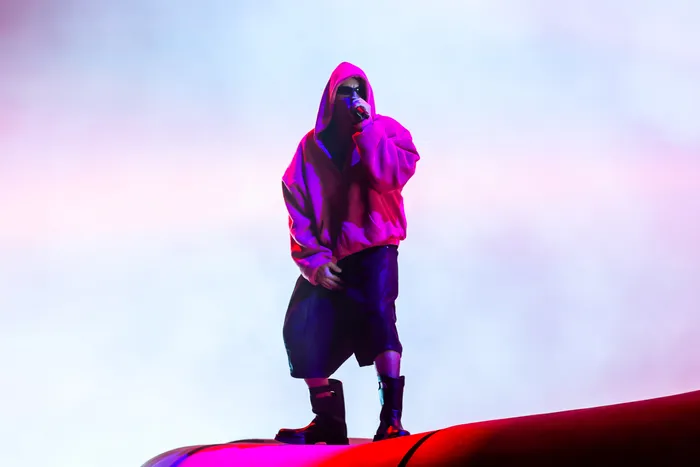
Coachella 2026 was already buzzing with anticipation, but nothing dominated the conversation quite like the possibility of Justin Bieber returning to the festival stage. When the lights dimmed on Saturday night and the first shimmering synths echoed across the Indio desert, the rumors became reality. What followed was a performance instantly immortalized as Bieberchella 2026, a cultural milestone that blended nostalgia, innovation, and pure pop spectacle.
Bieber opened with a cinematic remix of “Hold On,” stepping through a cascade of holographic desert storms that dissolved into neon skylines. It was a visual metaphor for his artistic journey — from the turbulence of early fame to a renewed creative clarity. His vocals were confident, textured, and emotionally grounded, signaling an artist fully in command of his craft.
The setlist was a masterclass in reinvention. Classics like “What Do You Mean?” and “Peaches” were re‑arranged with futuristic electronic layers, while new 2026 tracks showcased a bold fusion of alt‑pop, house, and R&B. The crowd roared when Doja Cat joined him for a high‑energy debut of their unreleased collaboration, and the atmosphere shifted to something almost intimate when Billie Eilish appeared for a haunting acoustic duet of “Lonely.”
What truly set Bieberchella 2026 apart was the emotional undercurrent running through the performance. Bieber spoke candidly between songs about growth, resilience, and rediscovering joy in music. It wasn’t scripted; it felt like a conversation with the hundreds of thousands watching.
As fireworks burst above the stage during a euphoric finale of “Sorry,” it became clear that this wasn’t just another Coachella headliner. It was a generational moment — the kind that defines an era, reshapes a career, and becomes a shared memory for everyone who witnessed it. Bieberchella 2026 wasn’t simply a performance; it was a declaration that Justin Bieber remains one of pop’s most enduring and evolving forces.