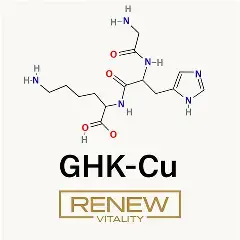
GHK‑Cu, a naturally occurring copper‑binding tripeptide, has become one of the most talked‑about ingredients in modern skincare and regenerative science. First identified in human plasma in the 1970s, its concentration declines significantly with age, which has fueled interest in its potential to restore youthful cellular behavior. Today, GHK‑Cu appears in serums, creams, and research‑grade formulations, all marketed for their rejuvenating effects. But like any bioactive compound, it carries both advantages and limitations(SeekPeptides).
The Benefits
One of the most compelling strengths of GHK‑Cu is its ability to stimulate collagen, elastin, and glycosaminoglycan production, all of which contribute to firmer, smoother, and more resilient skin. Studies suggest that GHK‑Cu acts as a cellular signaling molecule, encouraging skin cells to shift into a regenerative mode. This makes it particularly appealing for addressing fine lines, uneven texture, and early signs of aging.
GHK‑Cu also exhibits anti‑inflammatory and antioxidant properties, helping calm irritated skin and reduce redness. Its role in wound healing is well‑documented: it supports tissue repair, angiogenesis, and the removal of damaged proteins. Beyond skin, some research points to potential benefits for hair growth, as copper peptides may help extend the anagen (growth) phase of the hair cycle.
Because GHK‑Cu is naturally present in the body, topical use is generally well‑tolerated, making it a popular choice for people seeking gentle but effective rejuvenation (The Piazza Center).
The Drawbacks
Despite its promise, GHK‑Cu is not without concerns. The most significant risks arise from improper or excessive use, especially with injectable or high‑concentration forms. Overexposure to copper can contribute to a copper imbalance, which may require medical intervention to correct.
Even topical formulations can irritate sensitive individuals, particularly when layered with strong actives like retinoids or acids. Another challenge is product variability: the booming popularity of copper peptides has led to inconsistent formulations, questionable purity, and misleading marketing claims. Without standardized concentrations, users may experience unpredictable results (PathofPeds.com)
Finally, while early research is promising, many claims surrounding GHK‑Cu still require larger, long‑term studies. It is a biologically active compound, and its effects—positive or negative—depend heavily on formulation quality and responsible use.