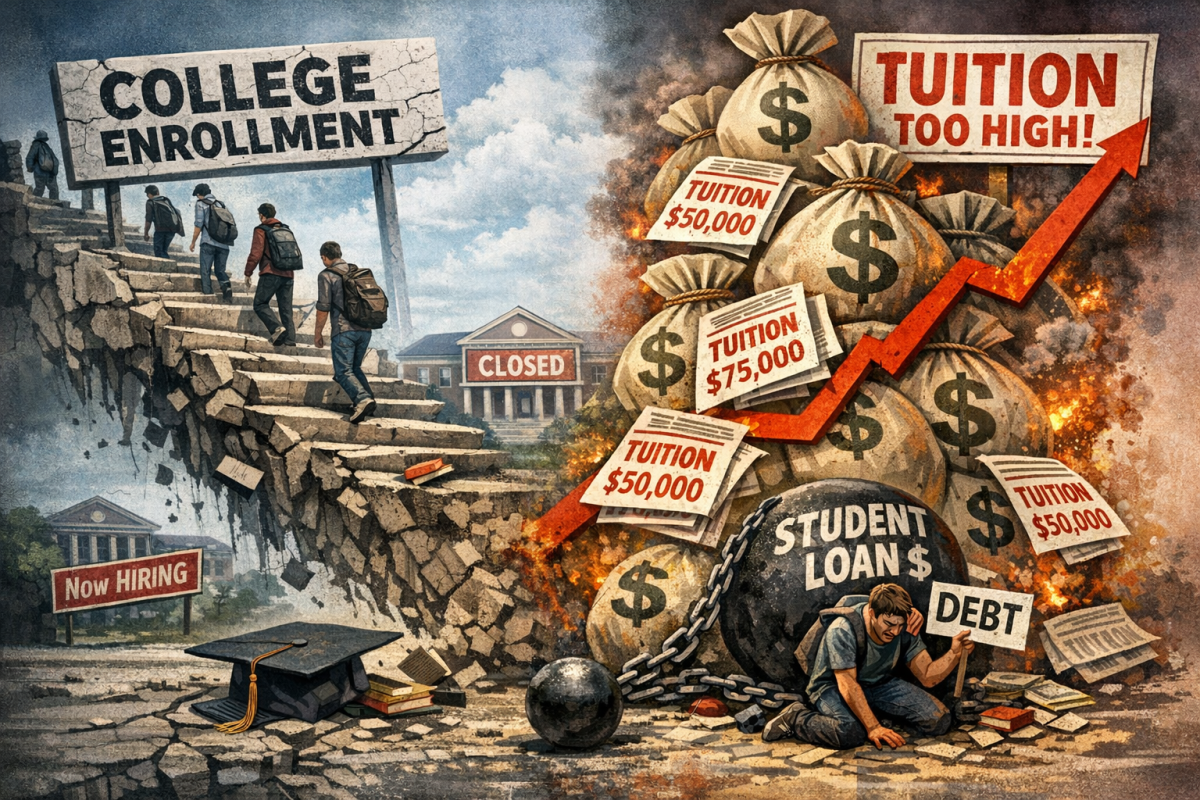
Across the country, colleges are facing a reality that would’ve seemed unthinkable a generation ago: fewer students are enrolling. It’s not just a temporary dip or a pandemic‑related blip from five years ago. It’s a steady shift in how young people view higher education, and the reasons behind it say a lot about how the world is changing.
For many families, the biggest issue is cost. College has become incredibly expensive, and the idea of taking on tens of thousands, if not hundreds of thousands of dollars in debt feels overwhelming. Students today are more cautious and can’t seem to justify doing it. They’ve watched older siblings, parents, or friends struggle with loan payments long after graduation, some 20 or 30 years after. When the price tag of a degree keeps climbing, it’s natural to wonder whether it’s worth it.
At the same time, the job market looks different than it used to. More employers are open to hiring people based on skills rather than diplomas. Tech companies, trade careers, and certificate programs offer faster, cheaper paths into solid jobs. For some students, spending four years in a classroom doesn’t feel like the most efficient way to start a career anymore. Also, with the increasing demand for skilled trade workers as more retire each year than more come out of trade school. Going to an inexpensive trade school for a couple of years, then coming out with guaranteed work, is a much more appealing option for some.
The pandemic also changed the equation. When campuses shut down and classes moved online, many students realized they didn’t want to pay full tuition for a virtual experience and further more they didn’t have to. Opening up the pipeline for online colleges that don’t require a $15,000 cost of room and board to be a serious consideration. Being able to still get a degree, but at a much lower cost. Some postponed college and never returned. Others discovered they could work, earn money, or learn skills on their own.
There’s also a demographic shift happening quietly in the background. Birth rates have dropped, again due to economic reasons and some just not wanting children, which means there are simply fewer high‑school graduates than there used to be. Colleges are competing for a shrinking pool of students, and not all of them can keep up. Finally, there’s a cultural change. For decades, college was seen as the automatic next step after high school. Now, more young people are questioning that assumption. They’re exploring entrepreneurship, online learning, and alternative career paths that don’t require a traditional degree. The change is happening rapidly, and over the next 20 years, I think we’ll see several universities begin to shut their doors. Especially now with the world adapting to its new AI features, it all boils down to the question: Is the extreme cost of college really worth it?