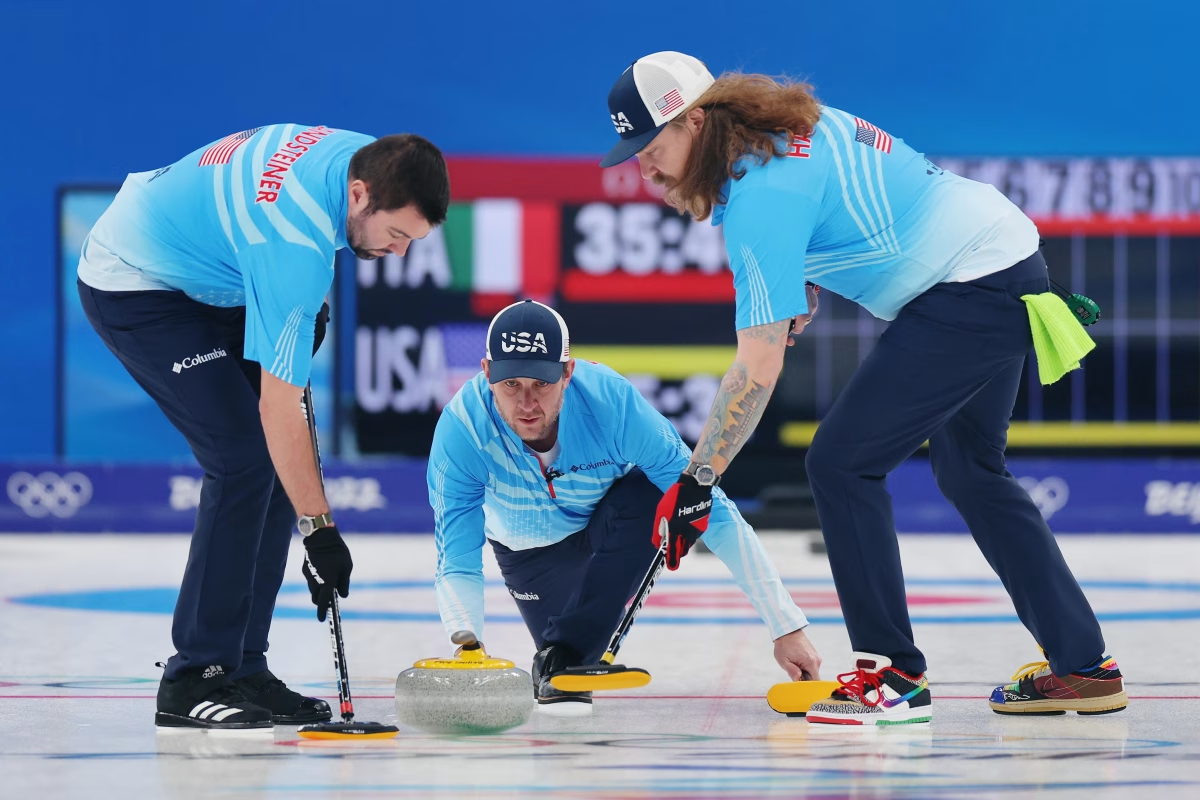
As the winter Olympics have started in Milan, Italy. One sport that people tend to forget about is curling.This sport is fast paced and captivates a large audience.
Curling is a distinctive and strategic winter sport that combines precision, teamwork, and tactical thinking. Played on a long sheet of ice, the game involves sliding polished granite stones toward a circular target area known as the “house.” Although curling may appear simple at first glance, it requires a remarkable blend of skill, communication, and physics-based decision-making.
A standard curling team consists of four players: the lead, second, vice‑skip, and skip. Each member has a specific role, but all contribute to the team’s overall strategy. The skip acts as the captain, standing at the far end of the ice to direct shots and determine the best tactical approach. Players take turns delivering stones, aiming to place them in scoring position or remove opposing stones from play.
One of curling’s most recognizable features is sweeping. As a stone glides across the ice, two players sweep vigorously in front of it using specialized brooms. Sweeping slightly melts the ice surface, reducing friction and allowing the stone to travel farther and straighter. This technique adds a dynamic layer of control, enabling teams to fine‑tune the stone’s path even after it has been released.
Strategy is central to curling. Teams must anticipate how stones will interact, plan several moves ahead, and adapt quickly to changing conditions on the ice. Decisions often involve weighing offensive opportunities against defensive positioning, making curling as much a mental contest as a physical one.
Curling has grown significantly in global popularity, especially since becoming a full medal sport in the Winter Olympics in 1998. Its combination of finesse, teamwork, and thoughtful gameplay has earned it the nickname “chess on ice.” Whether played competitively or recreationally, curling offers a unique and engaging experience that rewards both skill and strategy.