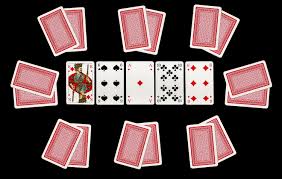
Texas Hold ’Em began as a simple card game played in small Texas towns, but over time it grew into one of the most recognized forms of poker in the world. The game centers on two private cards dealt to each player and five community cards placed face up on the table.
Every hand follows the same rhythm: the blinds go in, the dealer passes out two cards, and players decide whether their starting hand is worth continuing. The flop brings three shared cards, the turn adds a fourth, and the river completes the board with a fifth. With each stage, players combine their two private cards with the community cards to form the strongest five‑card hand they can. The ranking of hands—starting with the unbeatable royal flush and ending with a simple high card—guides every decision, from cautious checks to bold all‑in bets.
What makes Texas Hold ’Em compelling is the balance between open information and hidden information. Everyone sees the same community cards, but only each player knows their own two cards, creating a constant tension between what is known and what might be. A player with a weak hand can still win by reading opponents well enough to make them fold, while a strong hand can crumble if the final card unexpectedly changes the board.
Over decades, the game’s mix of luck, strategy, psychology, and dramatic reveals turned it into a staple of casinos, tournaments, and home games alike. Whether played casually among friends or under bright lights for championship titles, Texas Hold ’Em remains a game where patience, nerve, and a little bit of luck can turn two simple cards into a winning moment.