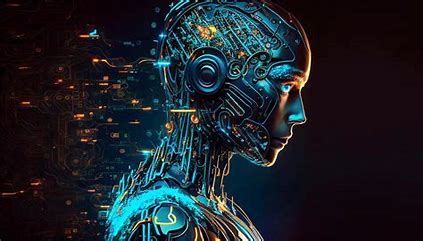
Artificial intelligence has undergone one of the most dramatic technological transformations of the modern era. 20 years ago, AI was still confined to narrow, rule‑based systems and early machine‑learning models. Today, it powers everything such as medical diagnostics, creative tools, autonomous vehicles, and global communication platforms (Timspark.com). This evolution shows breakthroughs in algorithms, computing power, and the availability of massive datasets (Timsparks.com).
In the mid‑2000s, machine learning began shifting from handcrafted features to models that could learn patterns directly from data. This set the stage for the deep‑learning revolution of the 2010s, when neural networks, especially convolutional and recurrent architectures, achieved unprecedented accuracy in image recognition, speech processing, and natural‑language tasks. These advances were accelerated by the rise of GPUs, which made training large models feasible at scale (CLRN.org).
A major turning point arrived in 2017 with the introduction of the transformer architecture, which enabled models to process language with far greater context and efficiency. Transformers became the foundation for large language models (LLMs), culminating in systems capable of writing, coding, reasoning, and engaging in conversation (CLRN.org). Recent years have seen the emergence of multimodal AI, which integrates text, images, audio, and video into unified models, expanding AI’s creative and analytical capabilities even further.
Alongside technical progress, AI has become deeply embedded in scientific research, helping accelerate discoveries in fields such as biology, chemistry, and climate modeling. Scholars note that AI now encompasses a constellation of technologies aimed at understanding and replicating intelligent behavior, from learning and reasoning to perception and decision‑making.
Today’s generative AI marks the latest stage in this evolution, enabling tools that can design, simulate, and create at a level once thought impossible. As AI continues to advance, the next 20 years promise even more profound changes, raising new possibilities, new challenges, and new questions about how society will shape and be shaped by intelligent machines.
AI is a tool that, if used correctly, can greatly benefit our society in more ways than one. This newly-developed tool has the potential to completely revolutionize civilizations, which also means that it has the power to destroy society. We must use AI in the right ways and give that power to the right people. If not, AI could be the very thing that brings about the start of the end of society.